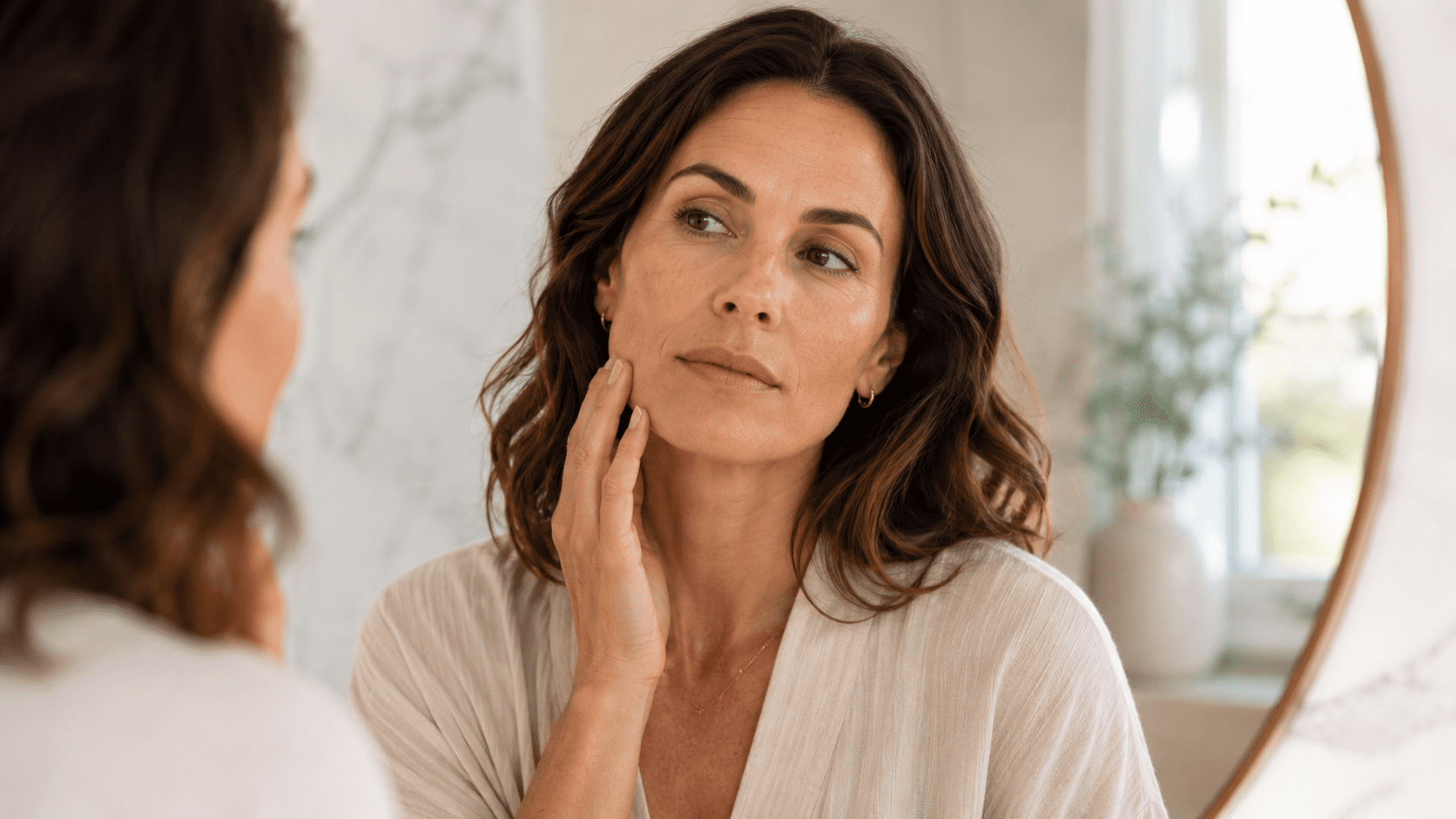

If you’re losing weight on semaglutide or tirzepatide and starting to notice changes in your skin, you’re not imagining things and you’re not alone. The patients we’re seeing most frequently at FACE/FIT right now are people who are genuinely proud of the weight they’ve lost and simultaneously bothered by what’s happening to their face and body in the process. The skin changes that accompany GLP-1-driven weight loss are real, predictable, and largely manageable with the right approach and the right timing.
This post is written specifically for patients who are currently on a GLP-1 medication or recently finished a course. It covers what’s actually happening to your skin and why, what treatments address it most effectively, when to start those treatments relative to where you are in your weight loss journey, and how to think about the face and the body as separate but related conversations.
What GLP-1 Weight Loss Does to Your Skin
GLP-1 medications produce weight loss by reducing appetite and caloric intake, which means the body loses fat progressively over months rather than in a single surgical event. The speed and pattern of that fat loss creates specific skin challenges that are worth understanding clearly.
Subcutaneous fat loss: Fat beneath the skin provides structural support and contributes to the skin’s outward appearance. As subcutaneous fat decreases, the skin that was supported by it has less underneath. For skin that has maintained its elasticity, this isn’t a problem. For skin that has lost elasticity through age, prior weight changes, or UV damage, the reduction in underlying support reveals laxity that was being compensated for by volume.
Facial volume loss: The face loses fat in a specific pattern during weight loss. The buccal fat pads, temples, and midface are often among the first areas to deflate, producing the gaunt, hollowed appearance that’s been widely discussed in the context of “Ozempic face.” This isn’t caused by the medication itself. It’s caused by caloric restriction and fat loss, which has always produced facial changes in people who lose significant weight. The speed and effectiveness of GLP-1-driven weight loss just makes it more noticeable than slower weight loss might have been.
Skin laxity without time to contract: Skin has some capacity to contract gradually as the volume beneath it changes. This capacity depends heavily on age, genetics, prior sun damage, and how quickly the weight was lost. When fat loss happens faster than the skin can adapt, the skin appears loose and crepey rather than following the new contour. The abdomen, upper arms, inner thighs, and neck are the most commonly affected body areas.
Collagen accelerated loss: Significant caloric restriction can affect collagen synthesis, since collagen production requires adequate protein and specific nutrients. Patients who aren’t prioritizing protein intake during their GLP-1 course may experience more pronounced skin quality changes than those who are actively supporting their collagen building blocks through diet.
The Face vs. The Body: Two Different Conversations
The aesthetic concerns of GLP-1 weight loss patients generally fall into two distinct categories that need different approaches, different timing, and different treatments.
The face: Facial changes during GLP-1 weight loss are primarily about volume loss rather than laxity. The face deflates and the structural support that gave it a full, lifted appearance diminishes. For most patients this is the concern that surfaces first and feels most visible, since the face is what they look at in the mirror and what other people see.
The good news about facial changes is that volume loss is addressable with fillers and collagen biostimulators. The better news is that facial treatment doesn’t necessarily need to wait until weight is fully stabilized the way body treatment does.
The body: Body concerns are primarily about skin laxity and quality rather than volume. The abdomen, arms, thighs, and neck develop loose, crepey skin as the underlying fat decreases. This responds to different tools than facial volume loss, primarily Attiva RF for skin tightening and collagen remodeling, with Sculptra or Liquid BBL for areas where volume restoration alongside tightening is relevant.
Body treatment timing is more sensitive to weight stability than facial treatment, for reasons we’ll cover below.
Timing: When to Start What
This is the most practically important section in this post because the timing of treatment relative to where you are in your weight loss affects both outcomes and cost-effectiveness.
During active weight loss (weight still changing significantly):
Facial treatment with neurotoxin is appropriate and unaffected by ongoing weight loss. Botox for expression lines is independent of body composition.
Conservative facial filler for specific areas, particularly under-eyes and temples where hollowing is pronounced, can be appropriate during active weight loss if the changes are significant and affecting quality of life. The caveat: facial fat distribution continues changing as weight decreases, which means a treatment that looks right at your current weight may look different at your goal weight. We typically recommend starting conservatively and building from a stable baseline.
Body treatment with Attiva RF is generally better deferred until weight has stabilized. The reason is straightforward: if your skin is still changing as fat continues to decrease, the starting point for treatment is a moving target. Treating now and then losing another 20 pounds means you’re tightening skin that will need to be treated again. Waiting produces a more accurate baseline and better long-term results from your investment.
As weight approaches and reaches stability:
This is when comprehensive facial and body planning makes sense. The assessment can be based on what your face and body actually look like at goal weight or close to it, rather than extrapolating from a state that’s still changing.
Body treatment with Attiva RF typically starts as weight approaches stability rather than requiring full stabilization. If you’re within 10 to 15 pounds of goal weight and the rate of loss has slowed, starting a treatment series is reasonable.
After weight is stable:
The ideal time for comprehensive treatment planning. The full picture of what your skin has retained and what it’s lost is visible. A realistic assessment of what non-surgical treatment can achieve versus what might be better addressed surgically is possible. And treatments you invest in now produce results you keep, rather than results that change as your body continues shifting.
Treatment Options and What Each Addresses
Attiva RF is the primary tool for body skin laxity after weight loss. It delivers radiofrequency energy subdermally to stimulate collagen remodeling in the dermis, tightening the tissue and improving skin quality in treated areas. The abdomen, arms, thighs, neck, and lower face all respond well. For a detailed breakdown of what to expect in each specific body area, see our Attiva RF by body area post.
Liquid BBL with HD Radiesse addresses gluteal volume loss specifically, which is common in GLP-1 patients and one of the body changes that bothers patients most. The treatment restores contour and improves skin quality with immediate visible results and a collagen-stimulating component. See our Liquid BBL page.
Dermal fillers address facial volume loss in specific areas: temples, midface, under-eyes, chin, and jawline are the most commonly affected in GLP-1 patients. HA fillers provide immediate, adjustable results. Radiesse provides structural support with a biostimulating component. See our Dermal Fillers page.
Sculptra addresses both facial and body volume loss through collagen biostimulation. For facial patients dealing with overall deflation rather than isolated areas, Sculptra’s full-face collagen response produces a different quality of result than targeting individual areas with filler. For body patients, Sculptra can complement Attiva RF for skin quality improvement. See our Sculptra page.
Microneedling addresses skin quality and collagen loss that affects how skin looks beyond just laxity. For patients who’ve experienced more pronounced skin quality changes, microneedling with PRP or PDRN supports collagen remodeling from within. See our Microneedling page.
Hormone optimization and peptide therapy address the internal factors that affect how skin responds during and after weight loss. GLP-1 patients who are also dealing with hormonal changes, including perimenopause in women or low testosterone in men, may find their skin recovery limited by hormonal factors that are worth addressing directly. Sermorelin peptide therapy specifically supports growth hormone levels, which decline with age and affect skin collagen production. See our Hormone Optimization page and Peptide Therapy page.
The Protein Question
This comes up in nearly every consultation with GLP-1 patients and it’s worth addressing directly. GLP-1 medications significantly reduce appetite, which means many patients are eating substantially less than they were before. If protein intake decreases alongside total caloric intake, the body loses muscle mass alongside fat and skin quality changes become more pronounced.
Adequate protein intake during GLP-1 treatment, typically aiming for at least 1 gram per pound of lean body mass daily, supports muscle preservation, supports collagen synthesis, and produces better body composition outcomes than caloric restriction without protein focus. This is the single lifestyle factor most consistently associated with better aesthetic outcomes in GLP-1 patients in our clinical experience.
If maintaining protein targets is difficult given reduced appetite, a protein supplement can bridge the gap. Your provider at FACE/FIT will ask about your current protein intake at your consultation because it affects both what we recommend and what results you can expect.
Setting Realistic Expectations
The skin changes from significant GLP-1 weight loss are real and not all of them can be fully addressed non-surgically. Setting accurate expectations upfront means you make better decisions about what to invest in and when.
Non-surgical treatments including Attiva RF, fillers, Sculptra, and microneedling produce meaningful, real improvement in skin quality, laxity, and volume for the majority of GLP-1 patients. For patients who’ve lost 20 to 50 pounds and are dealing with mild to moderate skin changes, the results are often fully satisfying.
For patients who’ve lost significantly more weight, or who have more pronounced skin excess particularly in the abdomen, inner thighs, or upper arms, non-surgical results will be meaningful improvements but may not fully address the degree of change. In those cases, having an honest conversation about what’s achievable non-surgically versus what might be better addressed surgically leads to better outcomes than promising more than non-surgical treatment can deliver.
Building a Plan at FACE/FIT
Because we offer both GLP-1 weight management and the full range of aesthetic treatments for managing the skin changes that follow, we’re able to approach this as a coordinated plan rather than separate consultations with separate providers who aren’t talking to each other.
A typical GLP-1 aesthetic consultation at FACE/FIT covers your current medication and weight trajectory, where you are relative to goal weight, the specific face and body areas of concern, what treatment options are appropriate for your current stage, what to defer until weight is more stable, and what lifestyle factors including protein intake are worth addressing now for better outcomes later.
Frequently Asked Questions
Can I get Attiva RF while still losing weight on semaglutide?
It depends on how much you’re still losing and at what rate. For patients whose weight is nearly stable or losing slowly, starting Attiva RF makes sense. For patients still losing rapidly, we typically recommend waiting until the rate slows and you’re approaching your goal weight. We discuss this at your consultation based on where you actually are.
Will I need to repeat treatments if I gain weight back?
Regaining significant weight after treatment means the skin changes occur again. The collagen improvements from Attiva RF persist in the skin regardless of weight changes, but new fat accumulation creates new structural changes. The best treatment results are maintained with stable weight, which is one reason we emphasize addressing the weight management component as part of an integrated plan.
Does semaglutide cause skin aging directly?
No. The medication itself doesn’t cause skin aging. The fat loss it facilitates causes the aesthetic changes patients associate with the medication. The same changes would occur from any approach that produced equivalent weight loss.
What's the minimum weight loss where skin treatment becomes relevant?
There’s no universal threshold. Some patients notice significant facial changes after 15 pounds. Others lose 40 pounds with minimal facial change due to favorable genetics and skin elasticity. The right answer is based on what you’re seeing and what bothers you, not a specific number.
I've heard about "Ozempic face." Is that what's happening to me?
“Ozempic face” is a colloquial term for the facial deflation and gaunt appearance that can accompany GLP-1-driven weight loss. The medication doesn’t cause it directly. Facial fat loss does, and it’s the same change that would occur from any approach producing significant weight loss. It’s addressable with the same tools used for age-related facial volume loss: fillers and collagen biostimulators.
Managing the skin side of your GLP-1 journey?
Book a consultation at FACE/FIT Houston. Whether you’re still losing weight and want to understand your options, or you’ve reached your goal and are ready to address what’s changed, we’ll build a plan around where you actually are and what’s realistically achievable.