Botox is the most searched aesthetic treatment in the world. It’s also the one most people spend months researching before actually booking their first appointment. The hesitation usually comes from a specific set of concerns: will I look frozen, does it hurt, how will I know I won’t hate it, what happens if something goes wrong, and what am I actually committing to. These are good questions and they deserve direct answers rather than glossy marketing copy.
This post is written for someone who’s genuinely curious about Botox, probably has a specific thing they’d like to address, and wants to understand the real experience before they commit. We’ll cover what happens at a first appointment from start to finish, what the result actually looks and feels like, the concerns that are valid versus the ones that aren’t, and how to think about whether the timing is right for you.
For the full overview of Botox at FACE/FIT including treatment areas, products we offer, and booking, see our Botox service page.
The Frozen Face Fear
This is the most common concern first-time patients bring up and it’s worth addressing first because it changes how people think about everything else.
The frozen, expressionless result that became culturally associated with Botox in the early 2000s was a real phenomenon, but it was a treatment decision, not an inherent product problem. Frozen faces happen when too much neurotoxin is placed in too many locations without consideration for natural movement. The muscle activity that allows normal expression is completely eliminated rather than strategically reduced.
Natural-looking Botox preserves most of your normal range of expression while softening the specific lines that bother you. You’ll still smile, raise your brows, and show surprise. You just won’t have the deep forehead creases when you do it, or the lines between your brows, or the crow’s feet you’ve been noticing. The goal is looking like you on a good day rather than looking like you’ve had work done.
The way to avoid frozen results is to go to an experienced injector who uses conservative amounts, assesses your facial movement before placing anything, and adjusts based on your anatomy rather than following a standard template. At FACE/FIT, we start with less than you might expect and bring you back at two weeks to assess the full result and add anything needed. This approach takes longer than placing everything at once but produces consistently better outcomes.
What Happens at Your First Appointment
Understanding the actual sequence of events helps reduce the anxiety that comes from not knowing what to expect.
The consultation: Before anything is injected, your provider assesses your facial movement. They’ll ask you to make various expressions: raise your brows, squint, frown, scrunch your nose. This isn’t just routine. It’s how the injection map gets built. Everyone’s muscle anatomy is slightly different and the placement needs to reflect your specific movement patterns rather than a standard grid.
You’ll talk through what specifically bothers you, what you’re hoping to achieve, and whether your expectations are realistic for a first appointment. This is also when you find out which neurotoxin we’d recommend: Botox, Dysport, Xeomin, or Daxxify each have different properties that may make one more appropriate for your goals. See our Neurotoxin page for how we think about that choice.
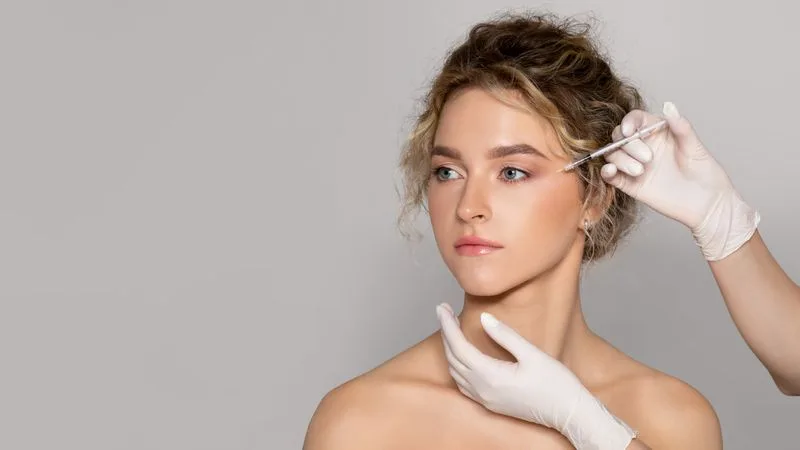
The injection: A topical numbing cream can be applied beforehand but many patients don’t need it. The needles used for Botox are extremely fine, much finer than a blood draw needle. Most patients describe each injection as a quick pinch or mild sting. The actual treatment takes 10 to 15 minutes once the consultation is complete.
After the appointment: You can go straight back to your normal day. There are a few things to avoid for 24 hours: don’t rub or massage the treated areas, stay upright for four hours, skip the gym, saunas, and alcohol. These precautions keep the product where it was placed rather than migrating to unintended areas.
Some patients notice mild redness at the injection sites for an hour or two. Very occasionally there’s minor bruising, which fades within a week.
The Timeline: What to Expect Week by Week
This is one of the most practically useful things to know before your first appointment because the results don’t appear immediately and the window between injection and full result is when most first-timers get anxious.
Days one through three: Nothing visible yet. The neurotoxin is binding to nerve receptors but no visible change has occurred. This is normal.
Days three through five: You may start to notice some softening in the treated areas, particularly in the forehead. It can feel slightly heavy or different as the muscle activity changes. This is also normal and not your final result.
Day ten to fourteen: This is the full result. Everything has settled and the muscle relaxation is at its maximum. This is when we ask first-time patients to come back for a review. If anything needs adjustment or feels uneven, this is when we address it.
Three to four months out: Results begin to fade as the neurotoxin gradually clears and the nerve signal returns. Most patients return for their next appointment around this time. With consistent treatment over time, many find intervals extending as the muscles learn to relax habitually.
The Questions Most People Don't Ask Out Loud
These come up in consultations constantly and deserve honest answers.
“What if I don’t like the result?” If the result is too much: neurotoxin wears off. Results last three to four months and there’s no permanent consequence. This is different from filler which can be dissolved but still involves product in your face. Neurotoxin simply clears over time. If something feels or looks off in the first two weeks, come back and we’ll assess. Some things can be addressed with a small adjustment. Others resolve on their own as the product settles.
“Will I need to keep doing it forever?” No one needs to keep doing Botox. If you stop, the muscle activity returns to its previous level and the lines that Botox was softening return. You won’t look worse than before you started; you’ll just look like you did before. The reason most patients continue is that they prefer how they look with it.
“What’s the right age to start?” There’s no universally right age. Preventative Botox in the late twenties makes sense for patients who notice strong expression lines forming and want to slow that process. Patients in their thirties and forties more typically start to address existing lines rather than prevent new ones. The right time is when you’re bothered enough by something specific to want to address it, not at a predetermined age.
“Will I need more units over time?” Some patients find they need slightly more over the first few appointments as the injector calibrates to their muscle strength. With very consistent long-term treatment, some patients find they need less over time as the muscles weaken slightly from habitual relaxation. There’s no reliable trajectory that applies to everyone.
“What happens if it’s placed in the wrong spot?” In experienced hands, complications are rare. The most common unwanted outcome is slight brow drooping, which can happen if product migrates slightly from a forehead injection. It’s temporary, resolves within a few weeks, and can often be partially addressed in the short term. Eyelid drooping is a much less common but more noticeable complication from incorrect placement around the eye area. These outcomes are significantly less likely with experienced injectors using appropriate placement and conservative amounts.
Understanding Units and Why Pricing by Area Is Misleading
This is worth explaining because it affects how patients compare pricing across practices and sometimes leads to disappointment.
Botox and other neurotoxins are priced per unit. The number of units needed varies significantly between patients based on muscle strength, the areas being treated, and the degree of relaxation you’re looking for. A patient with strong forehead muscles may need 20 units for the same area where a patient with lighter activity needs 12. Pricing by area as a flat fee either undercharges some patients (if the area requires many units) or overcharges others (if it requires few).
We price transparently per unit and give you a clear estimate at your consultation based on your specific muscle activity. This means the quote you receive reflects what your treatment actually requires rather than a generic area price. See our pricing page for current per-unit rates.
How to Know if You're Ready
A few things worth thinking through before booking your first Botox appointment.
Do you have a specific concern? The patients who are happiest with their results had a specific thing they wanted to address: the line between their brows, their crow’s feet, their forehead. Patients who book without a clear concern often find results harder to evaluate.
Are your expectations realistic? Botox addresses dynamic wrinkles from muscle movement. It doesn’t fill deep static lines at rest, address volume loss, or change skin texture. If you have established lines that are present even when your face is fully relaxed, filler or other treatments address those more effectively. We’ll tell you this at the consultation if it applies.
Can you commit to the follow-up? First-time Botox works best with a two-week follow-up built into the plan. This is where we assess the full result, make any adjustments, and establish your baseline for future appointments. Patients who skip this step miss the chance to fine-tune.
Are you doing it for yourself? The patients who sustain consistent results long-term are the ones who made the decision for their own reasons rather than because of pressure from a partner, a comment from someone else, or a trend they felt they should follow.
Frequently Asked Questions
How long does a first Botox appointment take?
Plan for 30 to 45 minutes for a first appointment including the consultation and assessment. Subsequent appointments typically take 15 to 20 minutes once your provider knows your anatomy and preferences.
Can I get Botox if I'm pregnant or breastfeeding?
No. We don’t perform neurotoxin injections during pregnancy or breastfeeding.
Will Botox affect my ability to make expressions at all?
Conservative amounts preserve most normal expression. You’ll still have full range of expression including smiling and raising your brows. Specific muscles responsible for the lines being treated are reduced in activity, not eliminated.
Is there anything that disqualifies someone from Botox?
Certain neuromuscular conditions, some medications that affect neuromuscular function, and pregnancy or breastfeeding are contraindications. We review your health history at every appointment.
How do I know how many units I'll need?
Your provider assesses your muscle activity at consultation and gives you an estimate. First appointments typically start conservatively and the two-week follow-up allows for any additions if more relaxation would improve the result.
Can men get Botox?
Yes. Men receive Botox at FACE/FIT regularly. The approach is calibrated differently for male facial anatomy since men typically have stronger muscles and a different aesthetic goal in terms of preserving more brow position and strength. The treatment is the same product; the placement and amounts reflect the anatomical differences.
Ready to have an honest conversation about whether Botox makes sense for you?
Book a consultation at FACE/FIT Houston. We’ll assess your facial movement, talk through your specific concerns, and give you a clear picture of what’s realistic before anything is injected.